
Table of Contents
- Why Fast Fashion Fails Plus Size Women
- How to Shop for Quality Plus Size Clothing
- Affordable Sustainable Clothing for Plus Size Shoppers
- Your Plus Size Capsule Wardrobe Guide
- The Cost-Per-Wear Calculation for Plus Sizes
- Care and Repair Tips for Extended Sizes
- Navigating Sizing and Fit Consistency
- Frequently Asked Questions
Last Updated: September 11, 2026
Why Fast Fashion Fails Plus Size Women
Fast fashion fails plus size women because it treats extended sizing as an afterthought: a handful of styles, cut from thinner fabric, with inconsistent fit. A 3X shopper often finds two or three viable options, and those sell out first.
This guide from Shop With Karolyn covers the practical alternatives to fast fashion for plus size women, from fabric checks to a cost-per-wear formula that shows what a garment really costs you.
The deeper problem is structural. Fast fashion brands chase trends on short cycles, and extended sizing adds pattern-grading cost they'd rather avoid. So the size range shrinks, the fabric thins, and fit gets less reliable with every size up. That's a design choice, not a supply issue.
How to Shop for Quality Plus Size Clothing
Shopping for quality plus size clothing starts with your own measurements, not a size label. Take your bust, waist, and hip measurements with a soft tape and compare them to the garment's listed numbers before every purchase.
Here's the sequence that works:
- Measure your bust, waist, and hips at their fullest points, wearing the undergarments you'll wear with the garment.
- Note your measurements in inches and keep them on your phone.
- Compare them to the brand's size chart, not your usual size.
- Read the fabric content and stretch description.
- Check the return policy before checkout.
A common mistake is trusting the size you wear at one store and assuming it transfers. Vanity sizing means the same body can be a medium at one label and a large at another, and that gap widens in extended sizes.
Read the Fabric Content Like a Buyer, Not a Shopper
Fabric content tells you more about longevity than marketing copy. Key patterns:
- 100% cotton and 100% linen hold shape and breathe, but they wrinkle and can shrink unless you wash cold and hang dry.
- Rayon and viscose drape well and feel cool, but they do pill and lose structure faster than cotton when washed hot.
- Polyester blends resist wrinkles and hold color, but a high synthetic percentage in a thin knit is the classic fast-fashion signal, it's cheap to produce and pills quickly.
- Elastane (spandex) at 2-5% adds recovery and stretch, which matters most at the bust and hip seams in extended sizes. Above roughly 10%, the garment tends to bag out over time.
A 95% cotton / 5% elastane blend usually outlasts a 60% polyester / 40% rayon blend at the same price: cotton resists pilling and elastane keeps the fit from stretching out.
Trust Garment Measurements Over Size Names
When a product page lists actual garment measurements, like a 3X with a 48-inch chest, treat that number as truth and ignore the size name. Brands that publish real measurements have graded the pattern properly, a strong signal of fit consistency.
If a brand lists only body measurements, add 2-4 inches of "ease" to your own numbers to estimate the finished fit. A fitted dress needs less ease; a relaxed top needs more.
The Federal Trade Commission's guidance on textile and wool labeling is worth knowing, because it requires brands to disclose fiber content and country of origin on the label. That disclosure is your fastest way to separate a real quality piece from a thin one dressed up with nice photography.
Construction Details That Signal Longevity
Scan the product photos for these signals before you buy:
- Lined skirts and dresses hold their shape and prevent see-through issues, which matter more in lighter fabrics.
- Finished seams (serged or French seams) resist fraying; raw, unfinished seams are a fast-fashion tell.
- Functional closures, real buttons, working zippers, outlast decorative ones that are sewn shut.
- Reinforced stress points at the bust, hip, and underarm seams, where extended sizes carry more tension.
Affordable Sustainable Clothing for Plus Size Shoppers
Affordable sustainable clothing for plus size shoppers exists, but "affordable" needs a working definition. The lowest sticker price isn't the cheapest garment. The cheapest garment is the one you wear for years.
Slow fashion pieces cost more upfront, but longevity closes the gap: a well-made dress worn three seasons costs less per wear than a cheap one that pills after two washes.
At Shop With Karolyn, we've spent more than 11 years helping women find pieces that hold up, including the Easy Come, Easy Go Tiered Midi Dress at $68.00, a fully lined 100% rayon style with a smocked bodice and pockets. It's the kind of piece that replaces three fast fashion dresses.

What to Check |
Fast Fashion Signal |
Slow Fashion Signal |
|---|---|---|
Size range |
Token 1X-3X styles |
Full XS-4X in most styles |
Fabric |
Thin, high synthetic blend |
Natural fibers or quality blends |
Construction |
Unlined, raw seams |
Lined, finished seams |
Fit grading |
Inconsistent across sizes |
Same fit through the range |
Longevity |
One to two seasons |
Multiple seasons |
Your Plus Size Capsule Wardrobe Guide
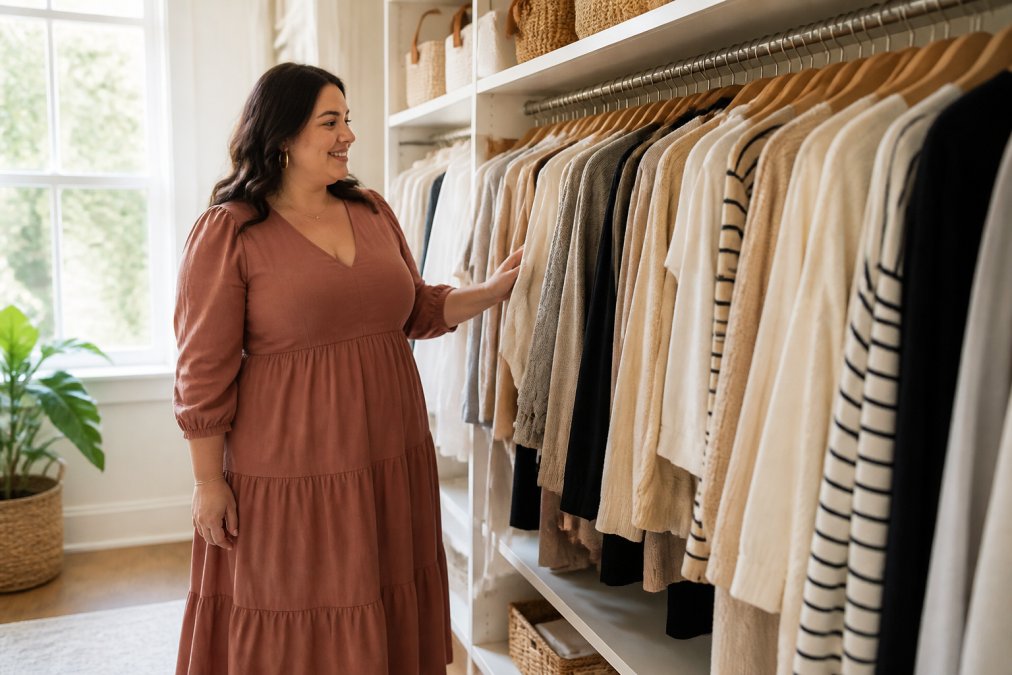
A plus size capsule wardrobe guide works on the same principle as any capsule: a small set of pieces that mix, match, and cover most of your life. For extended sizes, each piece has to earn its place, because options are scarcer and mistakes cost more.
Build around these core categories:
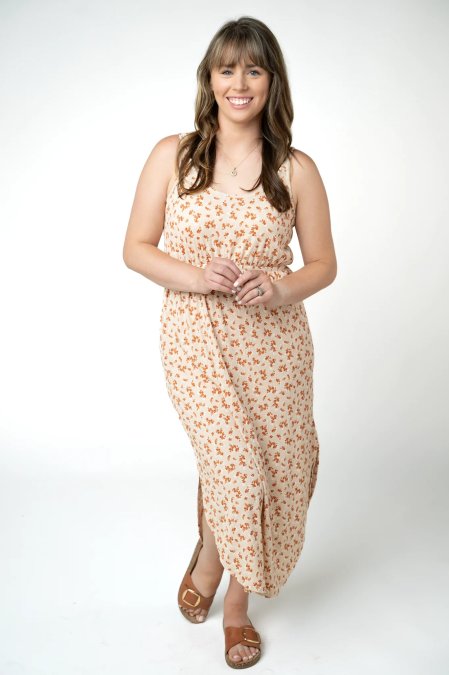
- Two dresses for everyday and occasions, like the Reagan Ribbed Midi Dress in Sand and Rust Floral by Michelle Mae at $46.00 or the In My Element Dress by Dear Scarlett at $36
- Denim in a fit you trust, checked against real measurements.
- Two tops that work with both skirts and denim.
- One layer for temperature and styling range.
The goal: every piece pairs with at least three others, turning a smaller wardrobe into more outfits, not fewer.
The Cost-Per-Wear Calculation for Plus Sizes
The cost-per-wear calculation for plus sizes is simple: divide the price by the number of times you'll actually wear the garment. A $68 dress worn 40 times costs $1.70 per wear. A $20 dress worn twice costs $10 per wear.
Extended-size shoppers often pay more per garment because of limited supply, making cost-per-wear even more important.
Cost-Per-Wear = Price ÷ Number of Wears
Run it before you buy. A dress at $68 worn weekly for a year lands near $1.30 per wear. A cheaper dress that loses its shape after a month never gets there.
Care and Repair Tips for Extended Sizes
Care and repair matter more in extended sizes because stress points, seams at the bust and hips, carry more tension. A seam that holds on a size small can pull on a 3X.
Follow these habits:
- Wash cold and hang dry to protect fibers and stretch.
- Turn garments inside out before washing to reduce surface wear.
- Reinforce high-tension seams with a quick stitch before they fail.
- Store knits folded, not hung, to avoid shoulder stretch.
- Repair small holes and loose buttons early, before they spread.
The American Cleaning Institute's fabric care resources offers guidance on matching wash settings to fiber content, which helps you avoid the shrinkage and pilling that shorten a garment's life. Garment longevity is a care habit as much as a purchase decision.
Navigating Sizing and Fit Consistency
Fit consistency is the hardest part of shopping for alternatives to fast fashion for plus size women, because there's no universal standard. A 2X can vary by several inches between labels, pushing many shoppers back to brands they already know. Here's how to measure yourself and decode vanity sizing.
Why Vanity Sizing Hits Extended Sizes Harder
Vanity sizing is the practice of labeling a larger garment with a smaller size number to flatter the buyer. In extended sizes it's a real problem, because pattern grading, scaling a base pattern up or down, doesn't scale linearly. A brand that grades a size 0 pattern up to a 3X by simply adding inches to the bust and waist produces a garment that fits nothing like the smaller sizes in the same line.
The result: a 2X from one label can measure three inches smaller at the waist than a 2X from another, even when both claim the same size name. That's a grading issue, not a supply issue.
Build a Personal Measurement File
The fix is a personal measurement file: keep your bust, waist, and hip numbers updated and check them against every size chart before you buy. How to measure:
- Bust: Measure around the fullest part of your bust, keeping the tape parallel to the floor and snug but not tight.
- Waist: Measure at your natural waist, the narrowest point, usually just above the belly button, not at the waistband of your jeans.
- Hips: Measure around the fullest part of your hips, usually 7-9 inches below your natural waist.
- Inseam: Measure from the crotch seam to the hem of a pair of pants that already fit you well.
Write these down in inches and keep them on your phone. Re-measure every six months or after any significant weight change.
Decode the Size Chart Before You Buy
When you open a product page, do these three things in order:
- Find the garment measurements, not just the body measurements. Body measurements tell you what body the size is meant for; garment measurements tell you what the actual piece measures. The second is what you want.
- Compare your numbers to the garment's numbers, not the size name. If your waist is 38 inches and the 2X lists a 40-inch waist, that's a 2-inch ease, usually a comfortable fit for a woven fabric, tight for a stiff one.
- Check the fabric's stretch. A 100% cotton garment with no stretch needs more ease than a 95% cotton / 5% elastane blend. A knit with 4-way stretch can fit closer to your body measurements.
When to Size Up or Down
A few rules of thumb that hold across most brands:
- Wovens with no stretch: Size to your largest measurement, then plan to tailor the rest.
- Knits with stretch: You can often size to your true measurement, since the fabric gives.
- Structured pieces (blazers, tailored trousers): Size to your largest measurement and budget for tailoring at the waist or hem.
- Relaxed or oversized styles: Read the description carefully, "oversized" in one brand is "true to size" in another.
Reduce Returns With a Fit Log
Keep a simple note on your phone: brand, size ordered, how it fit (small, true, large), and whether you kept it. After three or four orders, you'll have a personal size map that beats any generic size chart, and a defense against the frustration that sends shoppers back to fast fashion brands.
Where sizing gets confusing, ask. At Shop With Karolyn, we offer honest fit advice and fit videos in our VIP community so you can see how a piece moves on a real body before you order.
Frequently Asked Questions
What are some non-fast fashion brands for plus size clothing?
Look for brands that prioritize size-inclusive sizing. Many independent boutiques, like Shop With Karolyn, offer extended sizes XS through 4X with a focus on quality over quantity.
How can I build a capsule wardrobe as a plus size woman?
Start with versatile staples that mix and match: a few well-fitting dresses, quality denim, and neutral tops. Focus on fit consistency and garment longevity. Choose pieces you can wear multiple ways, like a midi dress that works for both casual and dressy occasions. Aim for 20-30 items that reflect your lifestyle and body positivity. This plus size capsule wardrobe guide helps reduce decision fatigue and textile waste.
Are there affordable alternatives to fast fashion for plus size bodies?
Yes. Affordable sustainable clothing for plus size shoppers often comes from independent boutiques, resale platforms, and thrifted finds. Look for sales on quality pieces, calculate cost-per-wear, and prioritize items that last. Many boutiques offer free shipping over a certain amount and carry extended sizing without the fast fashion markup. Shopping secondhand or during end-of-season sales can also keep costs down.
How do I identify high-quality, long-lasting clothing while shopping online?
Check fabric content (natural fibers like cotton and rayon tend to last), read size charts carefully, and look for detailed measurements. A measurement guide and clear return policy are good signs of a trustworthy retailer.
What is the difference between ethical fashion and fast fashion?
Ethical fashion focuses on fair trade, sustainable materials, and supply chain transparency, while fast fashion prioritizes speed and low costs, often at the expense of workers and the environment. Fast fashion contributes to textile waste and carbon footprint.